API Showdown - REST vs GraphQL vs SOAP
How your client talks to the server shapes everything from UX to network costs.
Data is involved in every part of modern web and mobile applications: user profiles, product lists, feeds, and settings. The protocol you choose for client ↔ server communication directly influences performance, developer ergonomics and how easy it is to evolve your system. Here I compare three common approaches - REST, GraphQL and SOAP - explain their trade‑offs, and give practical guidance on when to pick each.
What is REST?
REST is an architectural style built on top of HTTP. Resources are exposed via predictable URLs and manipulated with standard verbs: GET, POST, PUT, DELETE. Responses are usually JSON (or XML) and human‑readable.
Basic examples:
GET  /users        # list users
GET  /users/1      # details for user #1
POST /users        # create a user
PUT  /users/1      # update user #1
Why REST works: it’s simple, aligns with HTTP tooling and caches well. That makes it a solid default for many services.
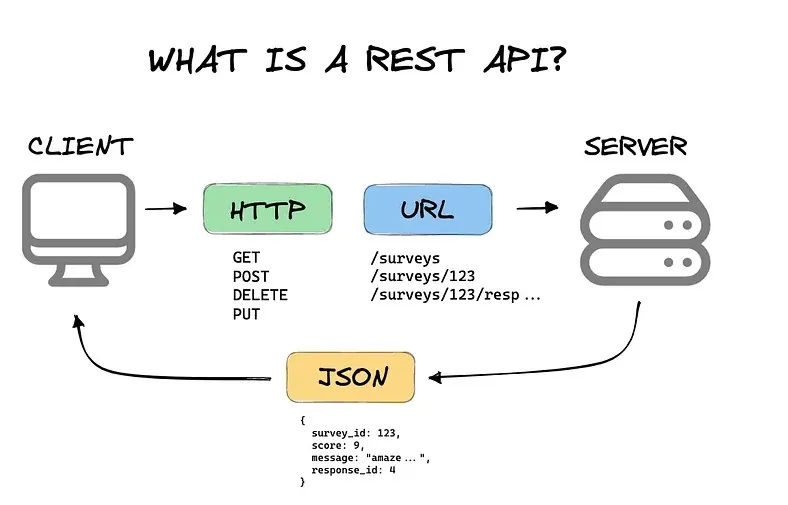 REST maps resources to HTTP methods with predictable URL patterns
What is GraphQL?
GraphQL (open‑sourced by Facebook) exposes a typed schema and a single HTTP endpoint. Clients declare exactly which fields they need; the server returns only those fields. That eliminates over‑fetching and reduces round trips for complex UI compositions.
Example:
query {
	user(id: 1) { id name avatar { url } }
}
GraphQL fits scenarios where clients need flexible, nested data (dashboards, mobile apps with limited bandwidth, mashups).
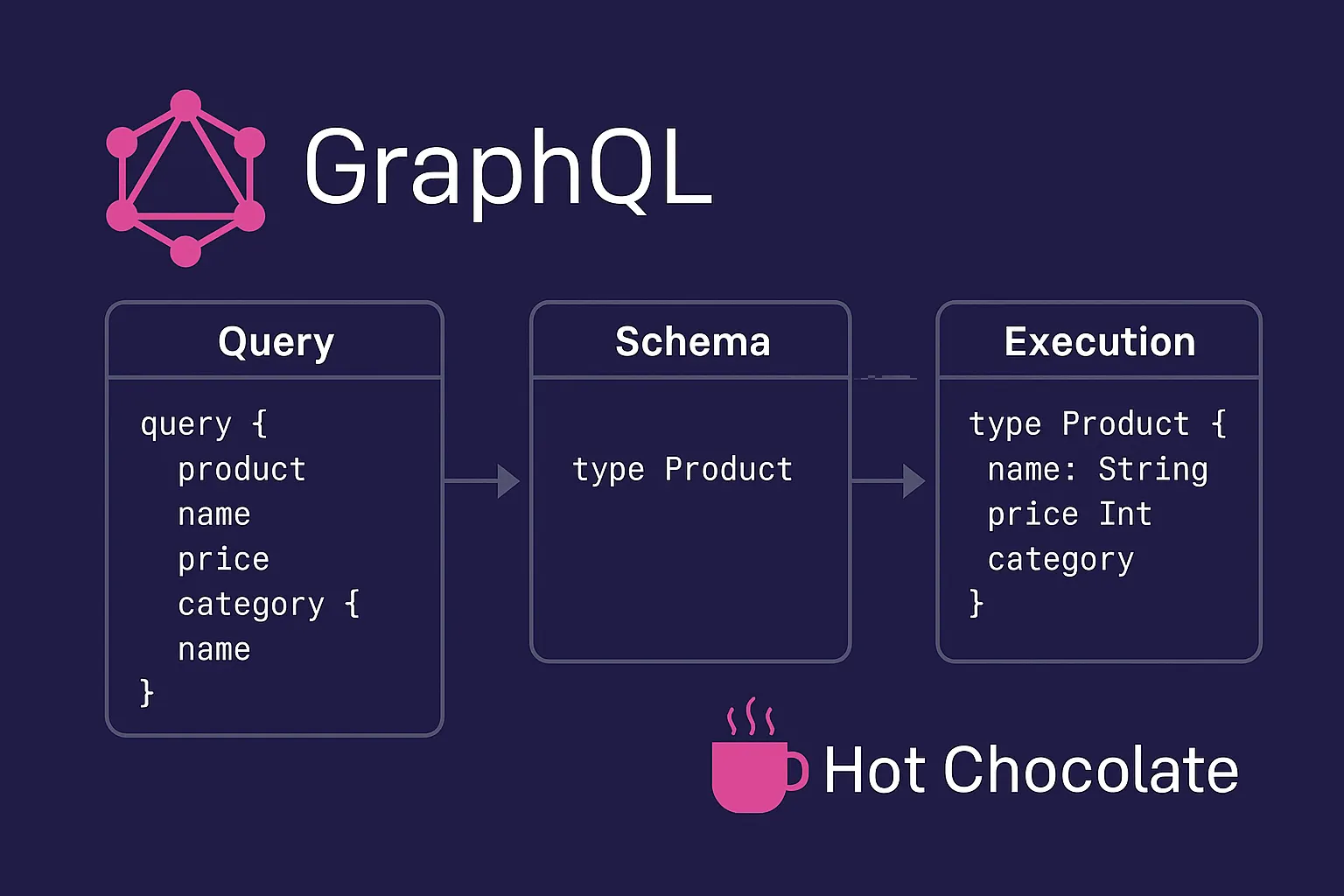 GraphQL allows clients to request exactly the data they need in a single query
What is SOAP?
SOAP is an older, XML‑based protocol with strict envelopes, WSDL contracts and a wide range of WS‑* standards (security, transactions). It remains common in enterprise integrations where formal contracts and advanced features are required.
Example SOAP request:
<soap:Envelope xmlns:soap="http://www.w3.org/2003/05/soap-envelope">
  <soap:Header/>
  <soap:Body>
    <GetUser xmlns="http://example.com/users">
      <UserId>1</UserId>
    </GetUser>
  </soap:Body>
</soap:Envelope>
Example SOAP response:
<soap:Envelope xmlns:soap="http://www.w3.org/2003/05/soap-envelope">
  <soap:Body>
    <GetUserResponse xmlns="http://example.com/users">
      <User>
        <Id>1</Id>
        <Name>John Doe</Name>
        <Email>[email protected]</Email>
      </User>
    </GetUserResponse>
  </soap:Body>
</soap:Envelope>
SOAP is verbose and generally heavier to work with; it’s appropriate when interoperability and contract rigor outweigh simplicity.
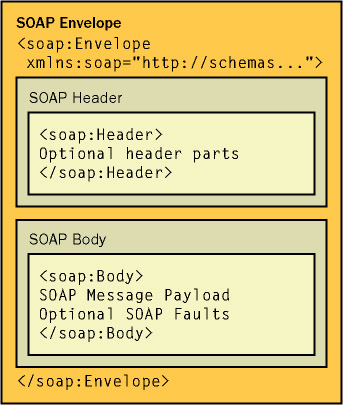 SOAP uses XML envelopes with headers and body sections for structured messaging
Key differences at a glance
- Data fetching: REST returns fixed resource shapes; GraphQL returns exactly the fields requested; SOAP serves XML according to WSDL contracts.
- Endpoints: REST has multiple resource endpoints; GraphQL uses one endpoint for queries and mutations; SOAP uses service endpoints defined by WSDL.
- Efficiency: GraphQL can reduce network requests for complex views; REST benefits from easy caching and simple HTTP semantics; SOAP provides comprehensive enterprise features at the cost of payload size and complexity.
- Versioning: REST often uses versioned endpoints (e.g., /api/v1/); GraphQL lets you evolve the schema without breaking clients by adding fields; SOAP relies on explicit WSDL versioning.
- Learning curve: REST is straightforward if you know HTTP; GraphQL requires schema and resolver knowledge; SOAP needs XML and WS expertise.
Pros and cons
- REST - Pros: easy to implement, works with HTTP caching, excellent tool support. Cons: may over/under‑fetch and require multiple requests for related data.
- GraphQL - Pros: client control over shape, fewer round trips, ideal for nested data. Cons: more complex server setup, caching is trickier, large queries can hit backends hard.
- SOAP - Pros: formal contracts, rich enterprise features (security, transactions). Cons: verbose XML, heavier tooling and slower adoption for modern web apps.
Practical recommendations
- Choose REST when your resources are simple, stable, and you want the lowest friction to ship. REST’s caching and broad tooling are strong advantages.
- Choose GraphQL when UIs require flexible, nested data and you want to minimize client‑server chattiness (e.g., social feeds, analytics dashboards, mobile apps).
- Choose SOAP when integrating with enterprise systems that require WSDL, WS‑Security or transactional guarantees.
Many teams use a hybrid approach: public REST endpoints for simple resources and a GraphQL layer where clients need flexible aggregation.
Case study - small shop vs analytics dashboard
- Small e‑commerce shop: product listings, cart and checkout are well‑served by REST. You get straightforward endpoints, easy CDN caching and fast time to market.
- Analytics dashboard or social feed: the UI often needs nested joins (posts → author → reactions → aggregated stats). GraphQL lets the client request the exact nested fields in one request, saving bandwidth and latency.
In short: pick REST for simplicity and networks that benefit from HTTP caching; pick GraphQL when client flexibility and fewer round trips are decisive.
Practical tips when using GraphQL
- Protect your server: set query depth and cost limits to avoid expensive requests.
- Add persisted queries or automatic persisted query (APQ) support to reduce payload sizes and improve caching.
- Monitor resolver performance - add tracing per field so you can find expensive data fetches.
Conclusion
There is no one‑size‑fits‑all winner. REST remains the pragmatic default for many APIs because of its simplicity and caching behavior. GraphQL offers compelling benefits for complex, client‑driven UIs but needs careful server‑side protection and observability. SOAP lives on where enterprise contracts and WS features matter.
The best engineers understand both approaches and choose the right tool for the problem: simple, cacheable REST for predictable resources; GraphQL for flexible, data‑dense clients; SOAP for legacy enterprise integrations.